ASRM Practice Committee. Optimizing natural fertility: a committee opinion. Fertil Steril. 2017. DOI: 10.1016/j.fertnstert.2016.09.029.
Effectiveness of preconception weight loss interventions on fertility in women: a systematic review and meta-analysis. Fertil Steril. 2024. DOI: 10.1016/j.fertnstert.2024.02.038.
The Role of Genital Tract Microbiome in Fertility: A Systematic Review. Int J Mol Sci. 2022. DOI: 10.3390/ijms23010180.
Genital Microbiota and Outcome of Assisted Reproductive Treatment-A Systematic Review. Life. 2022. DOI: 10.3390/life12111867.
Investigating the effect of an abnormal cervico-vaginal and endometrial microbiome on assisted reproductive technologies: A systematic review. Am J Reprod Immunol. 2018. DOI: 10.1111/aji.13037.
Interventions promoting mental health dimensions in infertile women: a systematic review. BMC Psychol. 2023. DOI: 10.1186/s40359-023-01285-1.
Complementary Therapies and Medicines and Reproductive Medicine. Semin Reprod Med. 2016. DOI: 10.1055/s-0035-1571194.
PRECONCEPTION HEALTH · 2026.09.23
Preparing for Pregnancy: What Actually Deserves Your Attention?
A 12-week preconception guide to wellbeing, metabolism, and reproductive microbiome care.
The short answer: preparing for pregnancy is not about making your body “perfect.” It is about recognizing risks, building sustainable rhythms, and bringing questions that need medical care to the right clinical team in time.
Put each idea in its proper place
Functional medicine, German naturopathy, neuroendocrine-immune networks, and the reproductive microbiome are often placed on one preconception checklist. They do not answer the same questions. A sound approach keeps practical lifestyle measures and draws a boundary around tests and therapies that do not yet have sufficient evidence.
Reasonable foundations
Regular sleep, balanced meals, appropriate movement, stress care, folic acid, and standard preconception screening.
Step 1: Both partners need a preconception assessment
Preparing for pregnancy is not only the woman's task. The value of a basic assessment is to identify manageable risks early, not to turn a healthy person into a list of tests.
Priorities for women
Menstrual pattern, ovulation, and previous pregnancy or miscarriage history.
Blood pressure, body weight, and BMI; complete blood count and ferritin when there is a risk of anemia.
TSH guided by a clinician when there is thyroid disease, menstrual irregularity, or miscarriage history.
Glucose or HbA1c when obesity, PCOS, family history of diabetes, or insulin-resistance risk is present.
Review immunity to rubella and varicella, and follow local guidance for infection screening and genetic counseling.
Priorities for men
Review smoking, alcohol, sleep loss, obesity, testosterone, or anabolic-steroid exposure.
Obtain semen analysis when conception is difficult, semen parameters were previously abnormal, or relevant risk factors exist.
Do not use “semen microbiome testing” as routine screening.
Seek fertility assessment early: no pregnancy after 6 months of trying at age 35 or older, or after 12 months under age 35; also for persistently irregular or absent periods, recurrent miscarriage, endometriosis, tubal disease, or abnormal semen parameters.
Step 2: Make food support you, not pressure you
Most people do not need an expensive “fertility diet.” More useful priorities are regular meals, adequate protein and vegetables, fewer highly processed foods, and avoiding extreme weight loss.
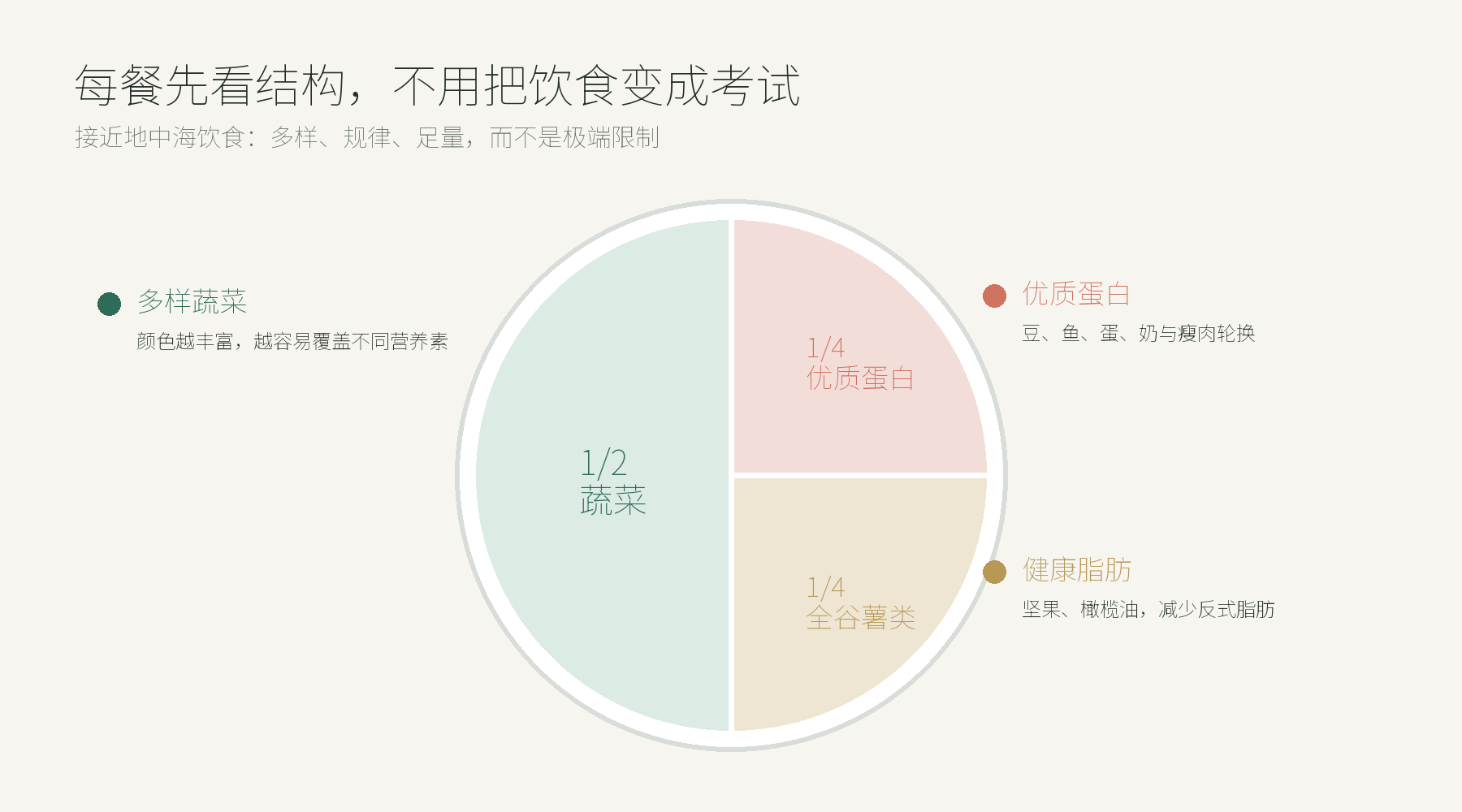
Aim for about half a plate of vegetables, one quarter quality protein, and one quarter whole grains or starchy vegetables at meals.
Rotate tofu and other soy foods, fish, eggs, dairy, and lean meat; choose low-mercury fish in appropriate amounts each week.
Use nuts and olive oil or other unsaturated fats in place of trans fats, and reduce sugary drinks.
For people with overweight or obesity, gradual improvement with professional support can help. Reaching a particular number on the scale should not become a prerequisite for pregnancy.
Start with meal structure: variety, regularity, and enough food rather than extreme restriction.
About folic acid: For the general population, 400–800 micrograms daily usually begins at least one month before conception and continues through early pregnancy. Higher-risk groups need individualized, prescribed doses and should not increase the dose on their own.
Step 3: Support the neuroendocrine-immune network
“Biological network medicine” is not a standardized clinical term. When it refers to neuroendocrine-immune networks, its most useful application is straightforward: create a rhythm for sleep, movement, emotions, and metabolism.
Every day
Keep a consistent wake-up time, allow roughly 7–9 hours of sleep, and make space for 10–15 minutes of breathing practice, mindfulness, or progressive muscle relaxation.
Every week
Accumulate at least 150 minutes of moderate activity plus two light-to-moderate resistance sessions. People with PCOS, amenorrhea, marked low weight, or excessive exercise should be assessed first.
Psychological support, cognitive behavioral therapy, and mind-body therapies can improve anxiety, depression, and quality of life in women experiencing infertility. Persistent insomnia, low mood, or intense preconception stress deserves care; asking for help is part of treatment.
Step 4: Reproductive microbiome care means avoiding blind intervention
Research suggests that the reproductive-tract microbiome may be related to fertility and assisted-reproduction outcomes. Sampling methods, testing technology, and findings vary between studies, however, and there is no routine intervention pathway for everyone.
With odor, itching, unusual discharge, pain during sex or urination, or pelvic pain, seek gynecologic examination and targeted pathogen testing.
Without symptoms, routine vaginal, cervical, or endometrial microbiome sequencing is not recommended.
Avoid douches, fragranced intimate-care products, over-the-counter boric acid, and inserting probiotics vaginally without clinical guidance.
Treat confirmed bacterial vaginosis, sexually transmitted infections, or genitourinary infections according to guidelines, while avoiding unnecessary antibiotics.
In one sentence: microbiome care begins with recognizing symptoms, obtaining a standard diagnosis, and avoiding overtreatment, not adding products after seeing a report.
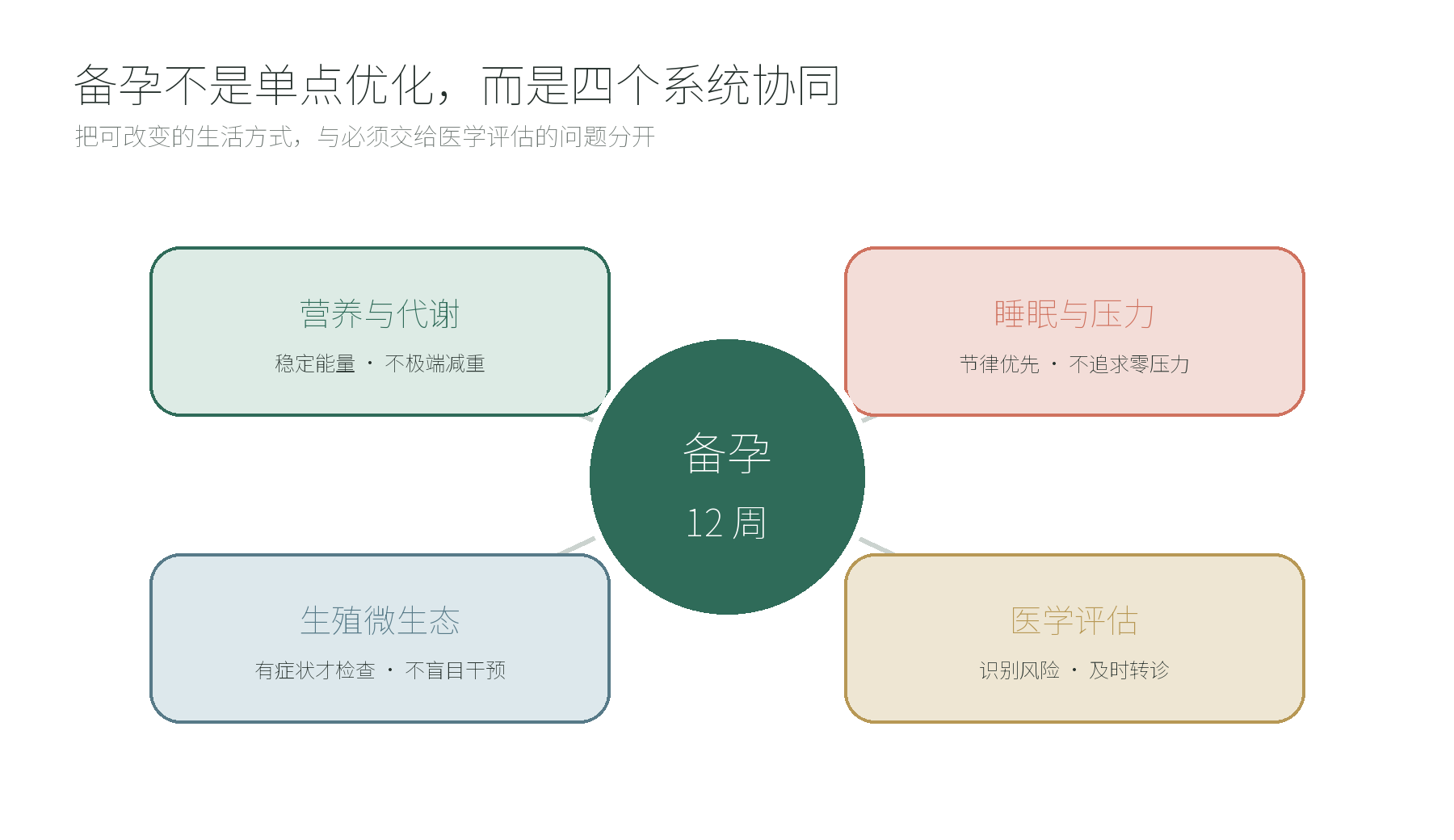
Separate the lifestyle changes you can make from questions that need medical evaluation.
Step 5: Keep the low-risk parts of German naturopathy
Some naturopathic ideas overlap with healthy daily living: regular time outdoors and daylight, gentle movement, relaxation practices, regular meals, and a sustainable work-rest balance. These can be supportive, but should not replace necessary testing or treatment.
Reasonable to keep
Walking, yoga, breathing practice, massage, regular routines, and reducing alcohol.
Use caution before pregnancy
Herbal mixtures, oral or vaginal essential oils, enemas, colon hydrotherapy, rapid detox programs, and high-dose antioxidants.
After a positive pregnancy test: review every medication, herb, essential oil, weight-loss product, and supplement again. “Natural” does not automatically mean safe in pregnancy.
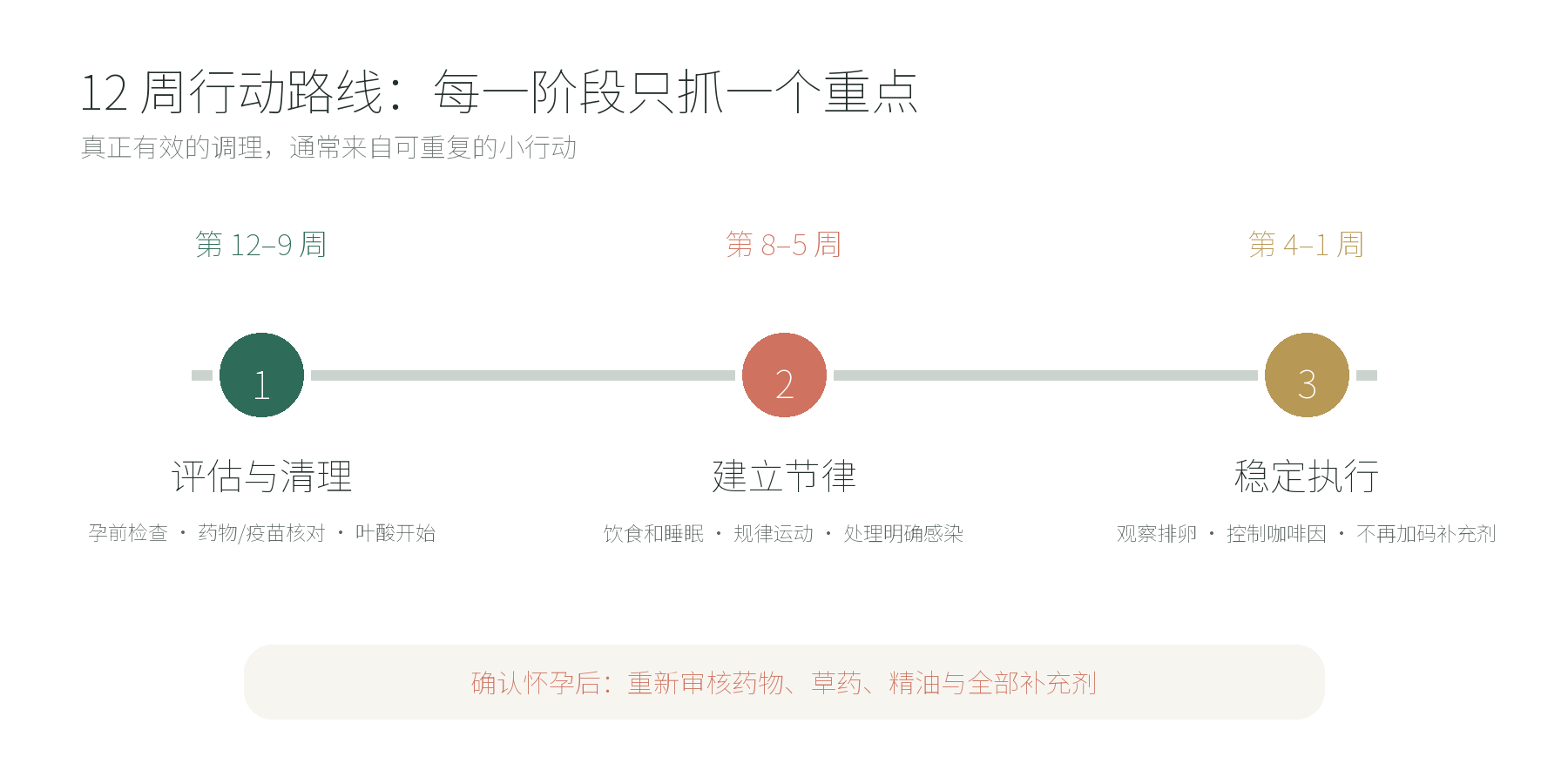
A 12-week preconception action map
Effective preparation is usually made of small actions you can repeat.
During the fertile window, intercourse every one to two days is sufficient; there is no need to pursue excessive frequency. Keep caffeine to about 200 mg daily and avoid alcohol while trying to conceive and during pregnancy.
Preparing for pregnancy is not an exam in becoming a “perfect body.” What matters is doing the manageable things consistently, leaving clinical judgments to clinicians, and keeping miraculous claims without enough evidence at a distance.
Safety note: This article is for health education and discussion with your clinician. It is not an individualized diagnosis, prescription, or promise of fertility. Seek professional guidance to make a plan when you have chronic conditions, use medications, have a history of miscarriage, menstrual irregularity, or difficulty conceiving.
Dr. Donghui Ma
Women’s lifelong health management · Preconception and reproductive health education
ASRM Practice Committee. Optimizing natural fertility: a committee opinion. Fertil Steril. 2017. DOI: 10.1016/j.fertnstert.2016.09.029.
Effectiveness of preconception weight loss interventions on fertility in women: a systematic review and meta-analysis. Fertil Steril. 2024. DOI: 10.1016/j.fertnstert.2024.02.038.
The Role of Genital Tract Microbiome in Fertility: A Systematic Review. Int J Mol Sci. 2022. DOI: 10.3390/ijms23010180.
Genital Microbiota and Outcome of Assisted Reproductive Treatment-A Systematic Review. Life. 2022. DOI: 10.3390/life12111867.
Investigating the effect of an abnormal cervico-vaginal and endometrial microbiome on assisted reproductive technologies: A systematic review. Am J Reprod Immunol. 2018. DOI: 10.1111/aji.13037.
Interventions promoting mental health dimensions in infertile women: a systematic review. BMC Psychol. 2023. DOI: 10.1186/s40359-023-01285-1.
Complementary Therapies and Medicines and Reproductive Medicine. Semin Reprod Med. 2016. DOI: 10.1055/s-0035-1571194.