Zhu BT, Conney AH. Functional role of estrogen metabolism in target tissues. Endocrine Reviews. 1998;19(5):641–672. DOI: 10.1210/edrv.19.5.0346.
Cavalieri E, Rogan E. Unbalanced metabolism of endogenous estrogens as a potential risk factor for breast cancer. Journal of Steroid Biochemistry and Molecular Biology. 2011;125(3–5):328–333. DOI: 10.1016/j.jsbmb.2011.03.008.
Michnovicz JJ, Bradlow HL. Induction of estradiol metabolism by dietary indole-3-carbinol in humans. Journal of the National Cancer Institute. 1990;82(11):947–949. DOI: 10.1093/jnci/82.11.947.
Kwa M, Plott CF, Blaser MJ, Adams S. The intestinal microbiome and estrogen metabolism in breast cancer. Journal of the National Cancer Institute. 2016;108(8):djw029. DOI: 10.1093/jnci/djw029.
The North American Menopause Society. The 2022 hormone therapy position statement. Menopause. 2022;29(7):767–794. DOI: 10.1097/GME.0000000000002028.
American College of Radiology. BI-RADS Atlas: Breast Imaging Reporting and Data System.
World Cancer Research Fund/American Institute for Cancer Research. Diet, Nutrition, Physical Activity and Breast Cancer.
ANONYMIZED CASE · WOMEN'S HEALTH EDUCATION · 2026.09.14
Breast Nodules in Perimenopause: Estrogen Metabolism, the Microbiome, and Women's Health
A functional and biological network medicine perspective on the relationships among estrogen metabolism, the gut–liver axis, the microbiome, and lifestyle.
A 48-year-old woman had been aware of breast nodules for approximately two years. A recent reassessment categorized the finding as BI-RADS 3. Her menstrual cycles remained generally regular, although menstrual flow had decreased. She had recently experienced vulvovaginal candidiasis. Her usual diet was high in meat and fatty cuts, and her family history included hypertension and elevated blood glucose. She was not using any hormonal products.
Summary of Findings
Breast imaging: currently assessed as BI-RADS 3, indicating a probably benign imaging finding.
Reproductive hormones: FSH approximately 18.6 IU/L and estradiol approximately 65.3 pmol/L; interpretation should take the timing within the menstrual cycle into account.
Urinary estrogen metabolites: 2-OH/16α-OH ratio approximately 1.04; 2-MeO-E1 and 4-MeO-E1 were low. The laboratory report classified approximately 52% as “health-associated” metabolism and 48% as “risk-associated” metabolism.
Other findings: CA125 approximately 40 U/mL, mildly elevated; fibrinogen approximately 3.56 g/L, also mildly elevated.
Taken together, these results suggested that the immediate health-management priority was not estrogen supplementation, but support for estrogen metabolism, methylation, conjugation and elimination, the gut–liver axis, and glucose and lipid metabolism.
1. From “Hormone Levels” to a “Hormone Network”
At age 48, many women are in the perimenopausal transition. Hormonal health at this stage is not simply a question of high or low levels; fluctuations, metabolic pathways, and tissue responses also matter.
From a functional medicine perspective, four areas may be considered:
Reducing the relative metabolic burden associated with the 16α-hydroxylation and 4-hydroxylation pathways;
Supporting further methylation of 2-hydroxy metabolites to form 2-MeO-E1;
Supporting glucuronidation, sulfation, and glutathione conjugation;
Supporting bile flow, microbial balance, and regular bowel elimination to limit unnecessary enterohepatic recirculation.
This is an approach to managing metabolic pathways, not an attempt to simply raise or lower estrogen. Laboratory findings should be interpreted alongside symptoms, menstrual stage, imaging, and standard clinical assessment.
2. Hepatic Phase II Metabolism: Prioritizing Methylation, Conjugation, and Elimination
In this case, 2-MeO-E1 was relatively low; therefore, nutritional support for methylation may be considered as one component of the health-management plan.
Food priorities
Leafy greens, legumes, oats, nuts, and seeds;
Eggs, fish, soy foods, and appropriate amounts of high-quality protein;
Foods providing folate, B vitamins, choline, betaine, magnesium, and zinc;
Sources of sulfur-containing amino acids, including glycine and cysteine;
Adequate fluid intake and prevention of chronic constipation.
A food-first, gradual approach is more suitable for building a stable long-term metabolic foundation than starting several high-dose nutrients at the same time.
3. The Gut–Liver Axis: Helping Conjugated Metabolites Leave the Body
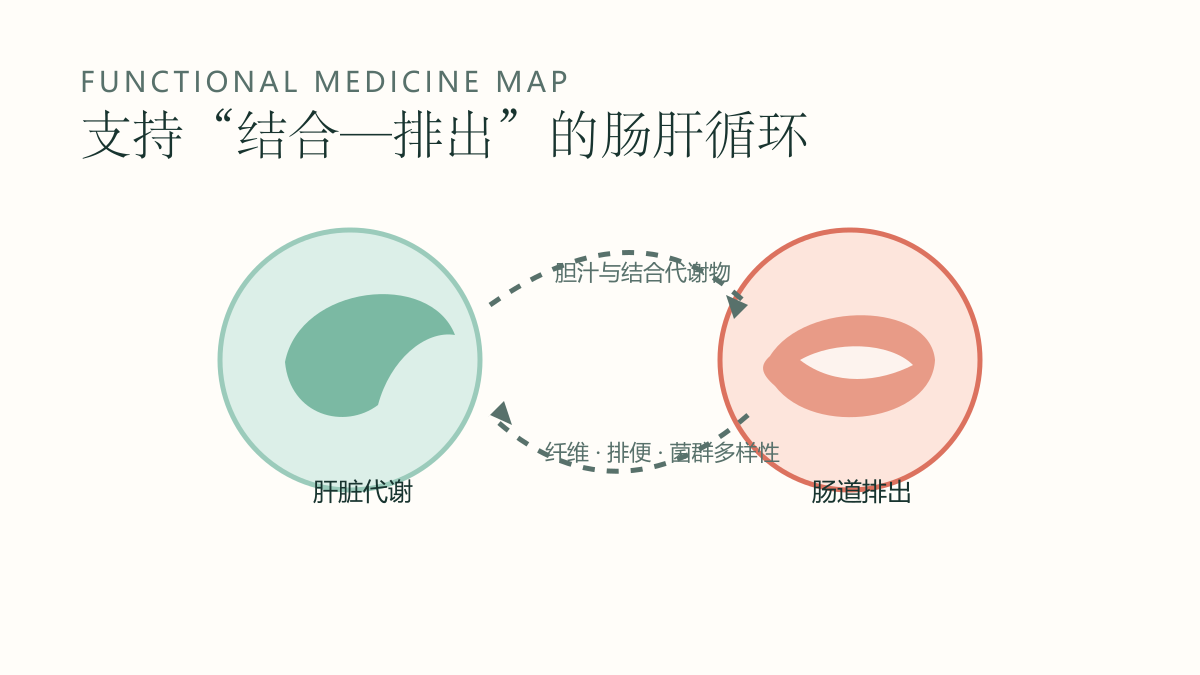
The gut–liver axis: hepatic conjugation, biliary transport, microbial activity, and regular bowel movements all contribute to metabolite elimination.
After estrogen metabolites are processed by the liver, they need to be eliminated through bile and stool. Low fiber intake, constipation, and limited microbial diversity may influence this process.
Practical lifestyle measures
Gradually work toward 25–35 grams of dietary fiber per day;
Include a variety of vegetables, legumes, whole grains, and berries;
Aim to include 20–30 different plant foods each week;
Consider moderate amounts of unsweetened yogurt, kefir, or other tolerated fermented foods;
Maintain regular bowel movements;
Reduce chronically high-fat, fried, and highly processed foods.
Cruciferous vegetables such as broccoli, cabbage, kale, and arugula can form part of the regular diet and provide gentle food-based support for estrogen metabolism.
4. Supporting Lipid and Glucose Metabolism
A preference for fatty meat, together with a family history of hypertension and elevated blood glucose, indicates that the wider metabolic context should also be considered. Some fatty and processed meats can be replaced with fish, soy foods, eggs, poultry, nuts, and olive oil.
Measures that may be followed over time include:
Blood pressure, waist circumference, and body weight;
Fasting glucose and HbA1c;
Fasting insulin;
Triglycerides, HDL-C, and LDL-C;
Liver function and, when appropriate, assessment of fatty liver risk.
5. Microbiome Care: Less Disruption, More Support for the Environment
When a previous episode of vulvovaginal candidiasis is no longer symptomatic, the priority is to support the local barrier rather than pursue prolonged antimicrobial treatment or indiscriminately combine probiotics:
Avoid vaginal douching;
Avoid fragranced washes and irritating intimate-care products;
Choose breathable underwear and change promptly after exercise;
Reduce refined sugar and sugar-sweetened beverages;
If symptoms recur, consider vaginal testing and an assessment of glucose metabolism;
Select probiotics individually according to strain, tolerance, and actual symptoms.
6. Movement, Sleep, and Stress Are Part of Metabolic Support
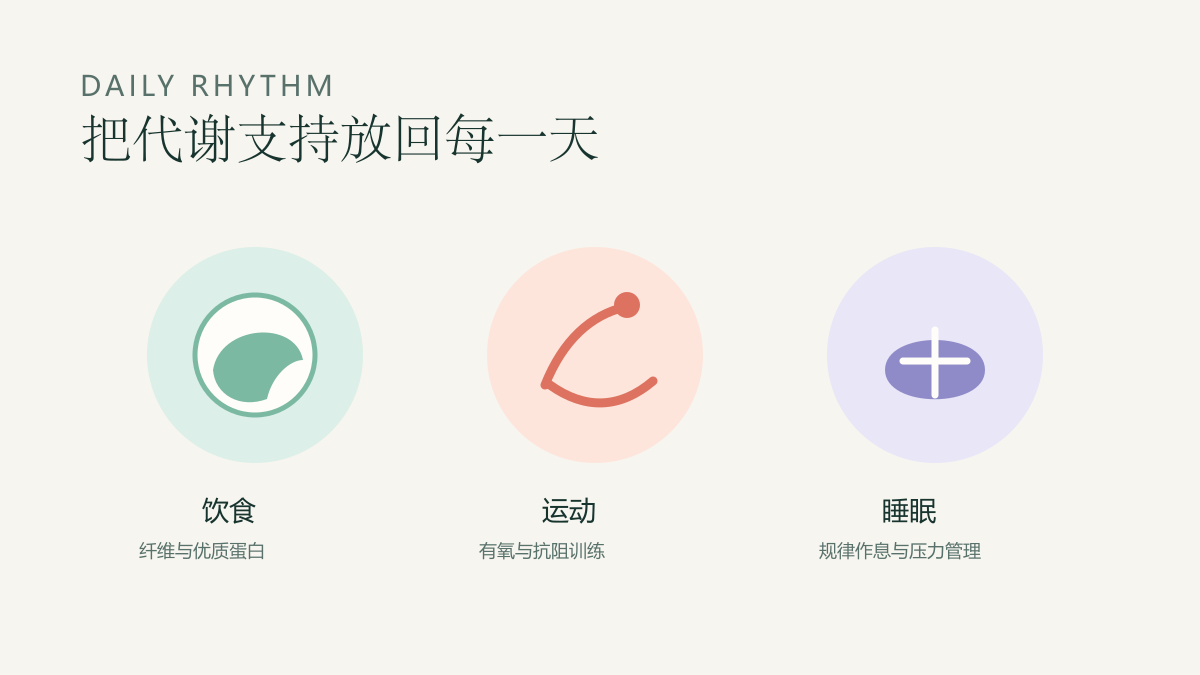
Bringing metabolic support into daily life: food, movement, sleep, and stress management.
150–300 minutes of moderate-intensity activity per week;
At least two resistance-training sessions per week;
Seven to nine hours of sleep, with a consistent schedule when possible;
Walking, breathing exercises, yoga, or meditation to reduce chronic stress;
Avoid extreme dieting, rapid weight loss, and chronic sleep deprivation.
Movement and sleep can influence insulin sensitivity, inflammatory signaling, gut function, and the experience of perimenopause. They are central components of a whole-person plan.
7. Principles for Supplement Use
After establishing the foundations of diet, bowel regularity, sleep, and movement, nutritional status and individual response can guide a discussion with a qualified professional about whether any of the following may be appropriate:
Magnesium or omega-3 fatty acids;
N-acetylcysteine (NAC) or glycine;
B vitamins and other methylation-related nutrients;
Soluble fiber or a small amount of flaxseed;
Food-based support from cruciferous vegetables.
Products such as diindolylmethane (DIM), indole-3-carbinol, and calcium D-glucarate should not be combined indiscriminately or started at high doses. A more measured approach is to change one variable at a time, begin conservatively, and review sleep, menstrual patterns, breast discomfort, gastrointestinal tolerance, and follow-up trends.
8. Using an 8–12 Week Observation Period
Useful items to record include:
Menstrual cycle, flow, hot flashes, and sleep;
Mood, stress, and breast discomfort;
Bowel frequency, bloating, and food tolerance;
Body weight, waist circumference, and blood pressure;
Glucose, insulin, lipids, and liver function;
Changes over time in relevant estrogen-metabolism markers.
Functional medicine is not about forcing one number to change immediately. The broader question is whether hepatic metabolism, bowel elimination, glucose stability, inflammatory status, sleep, and quality of life improve together.
Breast nodules, perimenopausal hormonal changes, and microbiome-related concerns may sit within the same women's health network. A more useful management approach supports the body's regulatory capacity across hepatic metabolism, the gut–liver axis, methylation-related nutrition, glucose regulation, physical activity, and sleep.
Food first. Adjust in stages. Change one variable at a time. Follow the wider network over time.
References
Zhu BT, Conney AH. Functional role of estrogen metabolism in target tissues. Endocrine Reviews. 1998;19(5):641–672. DOI: 10.1210/edrv.19.5.0346.
Cavalieri E, Rogan E. Unbalanced metabolism of endogenous estrogens as a potential risk factor for breast cancer. Journal of Steroid Biochemistry and Molecular Biology. 2011;125(3–5):328–333. DOI: 10.1016/j.jsbmb.2011.03.008.
Michnovicz JJ, Bradlow HL. Induction of estradiol metabolism by dietary indole-3-carbinol in humans. Journal of the National Cancer Institute. 1990;82(11):947–949. DOI: 10.1093/jnci/82.11.947.
Kwa M, Plott CF, Blaser MJ, Adams S. The intestinal microbiome and estrogen metabolism in breast cancer. Journal of the National Cancer Institute. 2016;108(8):djw029. DOI: 10.1093/jnci/djw029.
The North American Menopause Society. The 2022 hormone therapy position statement. Menopause. 2022;29(7):767–794. DOI: 10.1097/GME.0000000000002028.
American College of Radiology. BI-RADS Atlas: Breast Imaging Reporting and Data System.
World Cancer Research Fund/American Institute for Cancer Research. Diet, Nutrition, Physical Activity and Breast Cancer.
Important: This anonymized case is provided for health education only. It is not a diagnosis or treatment plan and does not replace an in-person assessment or recommended follow-up with breast, gynecology, or other qualified specialists. BI-RADS 3 findings should be followed according to the imaging report and the treating clinician's advice. Seek timely medical care if a lump enlarges rapidly, bloody nipple discharge, skin retraction, or other new symptoms occur. Nutritional supplements are not appropriate for everyone and should be considered in the context of medical history, medications, liver and kidney function, and individual risk.